
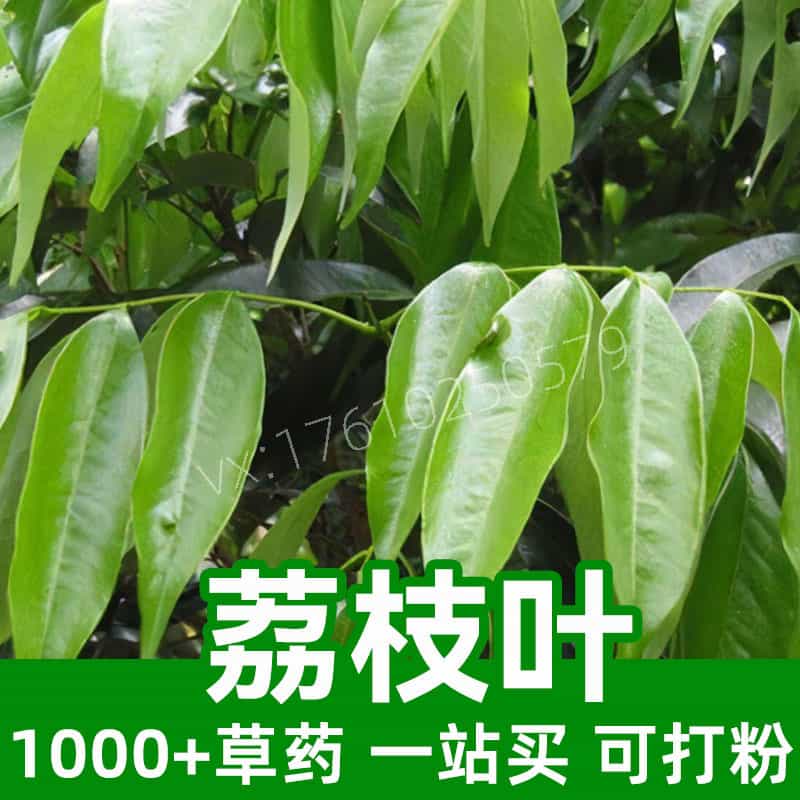



Soursop Leaf Product Introduction
Soursop leaf is a Chinese herbal medicine extracted from the leaves of the soursop plant. Its main components include flavonoids, triterpenes, polysaccharides and other active ingredients. These ingredients give it a variety of pharmacological effects, such as clearing away heat and detoxification, diuresis and swelling, and strengthening the spleen and liver. Soursop leaves are oval in shape, dark green on the surface, light green on the back, slightly curled at the edges, and soft in texture. It comes from the soursop plant and is a common Chinese herbal medicine.
In the field of traditional Chinese medicine, soursop leaves are widely used to treat various febrile diseases, infectious diseases, digestive system problems, etc. It is believed to have the effect of clearing away heat and detoxifying, and can be used to treat symptoms such as fever, colds, and sore throat. In addition, it is also used to improve liver function, promote gastrointestinal health, and has certain anti-inflammatory and antibacterial effects. Usually, soursop leaves can be made into decoctions, granules, or processed into pills, capsules, etc. for people to take.
Main active ingredients of soursop leaf
The main active ingredients of soursop leaves are a variety of chemical components, including flavonoids, triterpenes, polysaccharides, etc.
- Flavonoids: Soursop leaves are rich in flavonoids, such as quercetin, kaempferol, etc. These compounds have obvious antioxidant effects, which help to scavenge free radicals, reduce oxidative damage, and protect cells from damage.
- Triterpenoids: Soursop leaves contain a variety of triterpenoids, such as annona acid. These compounds have multiple pharmacological effects such as anti-inflammatory, antibacterial, and anti-tumor, and can be used to treat inflammatory diseases, infectious diseases, etc.
- Polysaccharide compounds: Soursop leaves are rich in polysaccharide compounds, such as arabinose, galactose, etc. These compounds have the functions of enhancing immunity, regulating immune function, promoting intestinal health, etc., and play an important role in human health.
- Volatile oil: Soursop leaves also contain a certain amount of volatile oil, including citronellol, eucalyptol and other ingredients. These volatile oils have sedative, analgesic, antibacterial and other effects, and have certain effects on improving human health.
- Other ingredients: In addition to the main ingredients mentioned above, soursop leaves are also rich in vitamins, minerals, amino acids and other nutrients, which play an important role in maintaining human health and promoting metabolism.
In summary, the main active ingredients of soursop leaves have multiple pharmacological effects such as antioxidant, anti-inflammatory, antibacterial, and anti-tumor, and play an important role in health care and treatment of human health.
Application scenarios and dosage of soursop leaf
Soursop leaves are widely used in traditional Chinese medicine and food, and their usage and dosage vary depending on the specific application scenario. The following is an introduction to their main applications and usage and dosage in traditional Chinese medicine and food:
- Application of Traditional Chinese Medicine:
- Heat-clearing and detoxifying: Soursop leaves have the effect of clearing heat and detoxifying, and are often used to treat colds, fever, sore throat and other symptoms. It can be used alone or in combination with other herbs.
- Diuretic and De-swelling: Soursop leaves can promote the excretion of water in the body, which helps to eliminate edema. It is often used to treat edema, urinary tract infections and other diseases, usually in combination with other diuretic herbs.
- ** Clears away heat and removes dampness **: For damp-heat syndromes, such as eczema, phlegm and dampness, soursop leaves also have a certain auxiliary therapeutic effect. It is often used in traditional Chinese medicine prescriptions and used in combination with other herbs.
- Food Application:
- Tea: Soursop leaves can be used as tea, which has the effects of clearing away heat and detoxifying, diuresis and swelling. Generally, 3-5 grams of dry leaves can be used each time to brew tea. Honey or other condiments can be added according to personal taste.
- Soup: Cook soursop leaves with other ingredients to make soup, which can clear away heat and detoxify, and increase the taste of the soup. Usually 10-15 grams of dried leaves are used each time, and the amount can be adjusted according to needs.
- Medicine and food have the same origin:
- Soursop leaves are not only used in traditional Chinese medicine, but also have a certain status in folk diet therapy. Because of its certain medicinal value, it is often used to make food that is both medicinal and edible, such as herbal tea, medicated food, etc., to regulate the body, clear away heat and detoxify.
In general, soursop leaves are widely used in traditional Chinese medicine and food, but the dosage should be carefully controlled to avoid adverse reactions caused by excessive use. For specific usage and dosage, it is recommended to use it under the guidance of a doctor or traditional Chinese medicine practitioner to ensure safety and effectiveness.
Introduction to the plant source, distribution and growth environment of soursop leaf
Soursop leaf refers to the leaves of the sugar apple plant, which is widely used in traditional Chinese medicine and food. The following is a detailed description of the plant from which the soursop leaf comes, its distribution and its growing environment:
- Plant Introduction:
- Soursop (scientific name: Dimocarpus longan var. malesianus) belongs to the Sapindaceae family and the genus Annona. It is an evergreen tree with a trunk diameter of about 20-30 cm and a tree height of up to 15 meters.
- The leaves are compound, opposite, with obovate or ovate leaflets, 7-10 cm long, 3-5 cm wide, with sharp serrations on the edges, shiny on the surface, and slightly hairy on the back.
- Distribution:
- Soursop is mainly distributed in Southeast Asia, including Guangxi, Guangdong, Yunnan, Hainan and other places in China, as well as Vietnam, Thailand, Laos, Cambodia and other countries and regions.
- In China, soursop grows mostly in tropical and subtropical regions, generally below 300 meters above sea level, and prefers humid climate and soil.
- Growth environment:
- Soursop prefers a warm and humid climate, and has high requirements for light and humidity. The suitable growth temperature is 20-30 degrees Celsius, and the annual precipitation is above 1000-1500 mm.
- During the growing season, it needs plenty of sunlight, but also a certain degree of shade. The soil needs to be loose, fertile, well-drained, and rich in organic matter.
- Growth habits:
- Soursop is a thermophilic tree species with strong adaptability to the environment, but it is sensitive to low temperatures and drought.
- Adequate water supply is required during the growth period, especially during the fruit development period. Insufficient water can easily lead to poor fruit development.
- Usually grows under sparse woods or on the edge of forests, but can also grow in moist valleys, stream banks or artificial woodlands.
The Annona custardii tree, to which the soursop leaf belongs, is a highly adaptable tropical and subtropical plant that can thrive and produce high-quality leaves and fruits under suitable climate and soil conditions.
Harvesting, processing and storage of soursop leaves
The harvesting, processing and storage of soursop leaves are important steps to ensure their quality and medicinal value. The following are detailed instructions for the harvesting, processing and storage of soursop leaves:
- Harvest time:
- Soursop leaves are usually harvested during the plant's peak growth period, usually from spring to summer. At this time, the leaves have a relatively high nutrient content and are of better quality.
- Harvesting method:
- Harvest in dry and sunny weather, avoiding rain or dew.
- Use clean tools when harvesting to avoid contamination or damage to the leaves.
- Usually harvested by hand, the leaves are cut off the branches.
- Processing:
- After picking, the soursop leaves should be processed promptly to avoid deterioration of the leaves.
- First wash the leaves to remove impurities and dust, then dry them in the sun or dryer until the leaves are completely dry.
- Storage:
- The dried soursop leaves should be stored in a ventilated, dry, cool and dark place, avoiding direct sunlight, high temperature and humidity.
- You can place the leaves in a dry, breathable paper bag or sealed jar to prevent the leaves from absorbing moisture and becoming moldy.
- Be careful to avoid contact with odorous substances to prevent the leaves from absorbing odors and affecting quality.
- Shelf life:
- With proper storage and preservation, the medicinal components of soursop leaves can be preserved for a long time, generally for half a year to more than a year.
- During storage, the quality of the leaves should be checked regularly and any mold or odor should be replaced or disposed of promptly.
The harvesting, processing and storage of soursop leaves are crucial to maintaining their medicinal value and quality. Correct harvesting and processing methods, as well as appropriate storage conditions, can ensure the long-term preservation of soursop leaves and maintain the stability and effectiveness of their medicinal components.

Monica Sun is a seasoned expert in the natural raw materials industry, with over a decade of experience specializing in traditional Chinese medicinal herbs, spices, and fungi. She is skilled in the sourcing, processing, and application of these materials, emphasizing sustainability and innovation. Monica Sun has contributed to the development of high-quality natural raw materials that serve as essential components in functional foods, pharmaceuticals, and cosmetics, delivering tailored solutions to meet diverse market needs.

.jpg)