
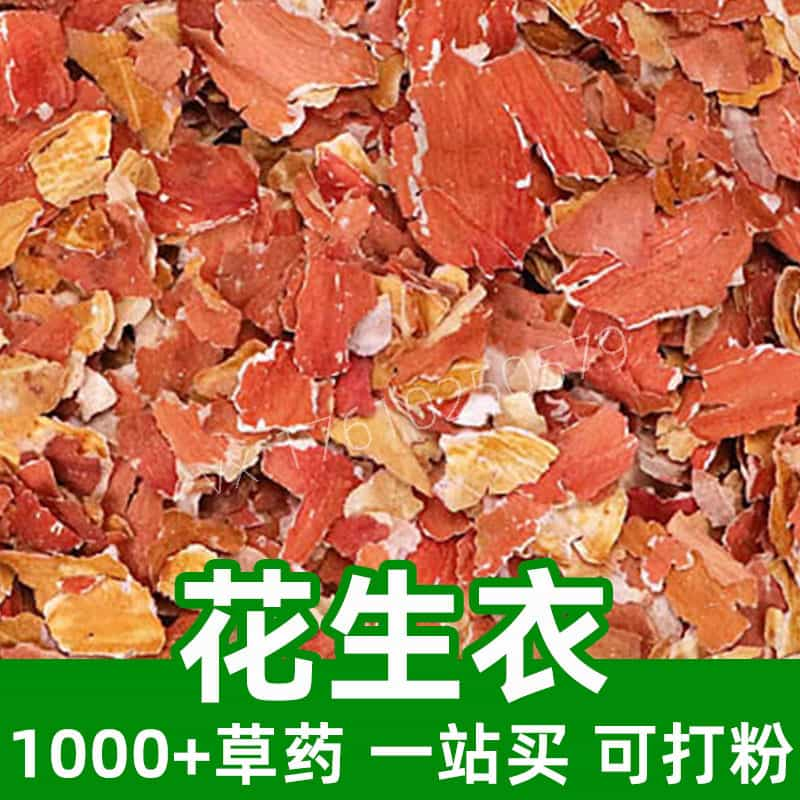



Peanut skin product introduction
Peanut skin refers to the outer shell of the peanut fruit, which is the part peeled off during the peanut processing process. Its main ingredients include cellulose, protein, fat, minerals, etc. The origin of peanut skin is closely related to the planting and processing of peanuts, and is usually a by-product left over from the peanut processing process.
As a common by-product, peanut skin has a variety of uses. First, in the field of traditional Chinese medicine, peanut skins are used as a medicinal material in prescriptions. Its bitter and cold nature belongs to the spleen and stomach meridian, and has the effects of clearing heat and detoxifying, promoting diuresis and reducing swelling. Secondly, peanut skins can also be used as raw materials for animal feed, enriching the dietary nutrition of animals. In addition, peanut skins can also be used as organic fertilizers for soil improvement and promoting crop growth.
In general, peanut skins, as a by-product of peanut processing, have certain medicinal value and are also widely used in animal feed and soil improvement.
Main active ingredients of peanut skins
Peanut skins are the outer shell of peanut fruits, which are usually peeled off during peanut processing. Its main active ingredients include cellulose, protein, fat, minerals, etc. The following is a detailed introduction to the main active ingredients of peanut skins:
- Cellulose: It is one of the main components of peanut skins, has good water solubility and insolubility, can promote intestinal peristalsis, help defecation, and is beneficial for preventing constipation and intestinal diseases.
- Protein: Although the content is relatively low, it is still one of the important components in peanut skins. Protein is an important component of human cell tissue. It can provide the amino acids needed by the human body and is essential for maintaining good health.
- Fat: The fat content in peanut skins is low, but it still contains a certain amount of unsaturated fatty acids, such as linoleic acid, which helps maintain blood lipid balance, lowers blood cholesterol levels, and is beneficial to cardiovascular health.
- Minerals: Peanut skins are rich in a variety of minerals, such as potassium, magnesium, zinc, etc. These minerals play an important regulatory role in the human body, including cell metabolism, nerve conduction, enzyme activity, etc., and are essential for the health of the body.
- Polyphenol compounds: Peanut skins are rich in polyphenol compounds, such as flavonoids and flavonoids, which have strong antioxidant effects, help to remove free radicals in the body, delay cell aging, and prevent the occurrence of chronic diseases.
- Vitamins: Although the vitamin content in peanut skins is low, it still contains a small amount of fat-soluble vitamins such as vitamin E, which have antioxidant and cell membrane protection effects.
In summary, the main active ingredients of peanut skins include cellulose, protein, fat, minerals, polyphenol compounds and a small amount of vitamins, etc., which have multiple functions such as promoting digestion, regulating blood lipids, and anti-oxidation. Moderate consumption is beneficial to human health.
Application scenarios and usage and dosage of peanut skins
Peanut skins have a wide range of applications in traditional Chinese medicine and food, mainly reflected in the following aspects:
- Application of traditional Chinese medicine:
- Heat-clearing and detoxification: Peanut skins are cool in nature and sweet in taste, and have the effects of clearing heat and detoxification, moistening the lungs and relieving coughs. In traditional Chinese medicine, peanut skins are often used to make Chinese medicinal materials, which are used in prescriptions for clearing heat and detoxification, moistening the lungs and relieving coughs.
- Expectorant and cough-relieving: Peanut skins are rich in cellulose, which can increase intestinal peristalsis, promote defecation, help clear phlegm in the body, and relieve cough symptoms.
- Diuretic and detumescent: Peanut skins also have the effect of diuretic and detumescent, and are suitable for symptoms such as edema and edema caused by damp heat.
- Food Application:
- Food Additive: Peanut skins can be used as natural food additives for seasoning and flavoring in food processing, increasing the taste and nutritional value of food.
- Food Raw Materials: Peanut skins can be used as food raw materials to make peanut skin tea, peanut skin soup and other foods, which have the effects of clearing heat and relieving summer heat, moistening the lungs and relieving cough.
- Medicinal Dietary Materials: Peanut skins can be used in medicinal diets such as stewing soup and porridge, and can be used with other ingredients of the same origin as medicine and food to regulate the body and enhance immunity.
- Usage and Dosage:
- Medicinal: Add an appropriate amount of peanut skins to water and boil, take the juice and drink it 1-2 times a day, or use it in stewing soup, the medicinal dosage is generally 10-30 grams.
- Edible: Add an appropriate amount of peanut skins to food for cooking, such as stewing pork, making soup, etc., or use it to make peanut skin tea, drink it 1-2 times a day.
- Precautions:
- Appropriate amount: Whether it is for medicinal or edible use, you should pay attention to the appropriate amount and avoid excessive consumption to avoid adverse reactions such as indigestion.
- Individual differences: Due to individual differences, the tolerance and reaction to peanut skins are different, and the dosage should be adjusted according to individual conditions.
In summary, peanut skins are widely used in traditional Chinese medicine and food fields. They are often used to clear heat and detoxify, moisten the lungs and relieve coughs, resolve phlegm and relieve coughs, promote diuresis and reduce swelling. The usage and dosage should be reasonably adjusted according to individual conditions to achieve safe and effective results.
Introduction to the source plants, distribution and growth environment of peanut skins
Peanut skins, also known as peanut shells, refer to the outer shell of the peanut (scientific name: Arachis hypogaea) fruit shell. It is a part of peanuts and is often used in medicinal and food processing. The source plants, distribution and growth environment of peanut skins will be introduced below.
- Source plants:
- Scientific name: Arachis hypogaea.
- Alias: ground beans, potatoes.
- Belongs: Arachis, Leguminosae, vines.
- Characteristics: Peanut is an annual herb with a well-developed root system, a thick taproot, spindle-shaped, and nodules; the stem is upright or oblique, branched, and about 20-50 cm in height; the leaves are pinnately compound leaves with 3-5 pairs of leaflets, which are ovate to lanceolate; the flowers are yellow with a butterfly-shaped corolla; the fruit is a pod containing 1-4 seeds.
- Distribution:
- Origin: Peanuts originated in South America and are mainly distributed in Brazil, Peru, Bolivia and other regions.
- Global distribution: Due to its important economic value and nutritional content, peanuts are now widely planted all over the world, including China, India, the United States, Nigeria and other countries and regions.
- Growth environment:
- Climate requirements: Peanuts have strong adaptability, like warm and humid climates, have high requirements for light, and the suitable temperature for growth is 20-30 degrees Celsius.
- Soil conditions: Peanuts are not very demanding on soil, but loose, well-drained sandy loam is preferred, and they are not resistant to water and humidity.
- Cultivation methods: Generally, sowing is carried out in spring, and attention should be paid to timely watering, fertilization, weeding, intertillage and other management measures to ensure a good growth environment.
- Planting area:
- Global planting area: Peanuts are one of the important food crops in the world, with a large global planting area, and are one of the main oil and legume crops.
- Situation in China: China is one of the world's major peanut producers, mainly distributed in North China, East China, Southwest China and other regions, with higher yields in Shandong, Henan, Hebei and other provinces.
In general, peanut skins come from the outer layer of the peanut plant's shell. Peanut plants are native to South America and are now widely planted all over the world. They are highly adaptable, like warm and humid climates and loose soils, and are one of the important food crops in the world.
Peanut skin harvesting, processing, storage and preservation
The harvesting, processing and storage of peanut skins are crucial to maintaining their quality and nutritional content. The following is relevant information about the harvesting, processing and storage of peanut skins:
- Harvesting time: After the peanut fruit matures, the shell is usually formed in the underground part of the peanut plant, that is, 5-10 cm below the ground, and it can be harvested at this time.
- Harvesting method: Peanut skins are usually harvested manually or mechanically. When harvesting manually, you can use tools such as shovels to dig out the peanut plants on the ground and then separate the shells. Mechanical harvesting can use professional equipment such as peanut harvesters for harvesting and separation.
- Processing: After harvesting, the peanut skins need to be processed, including washing and drying. Washing can remove the dirt and impurities on the surface, and drying can help reduce the moisture content and prevent mildew and rot.
- Storage: The following points should be noted when storing peanut skins:
- Dry and ventilated: Peanut skins should be stored in a well-ventilated and dry environment to avoid moisture and mold.
- Avoid light and moisture: Avoid direct sunlight and humid environment to prevent quality changes during storage.
- Sealed storage: Peanut skins can be packaged in sealed containers or bags to extend their shelf life.
- Avoid pests: During storage, regular inspections should be carried out to prevent pests.
- Storage time: Peanut skins can be stored for several months to more than a year under dry and ventilated conditions, but it is recommended to use them as soon as possible to ensure their quality.
In summary, the harvesting, processing and storage of peanut skins require timely harvesting, correct processing, and storage under dry and ventilated conditions, avoiding light and moisture, to maintain their quality and nutritional content.

Monica Sun is a seasoned expert in the natural raw materials industry, with over a decade of experience specializing in traditional Chinese medicinal herbs, spices, and fungi. She is skilled in the sourcing, processing, and application of these materials, emphasizing sustainability and innovation. Monica Sun has contributed to the development of high-quality natural raw materials that serve as essential components in functional foods, pharmaceuticals, and cosmetics, delivering tailored solutions to meet diverse market needs.
.jpg)