
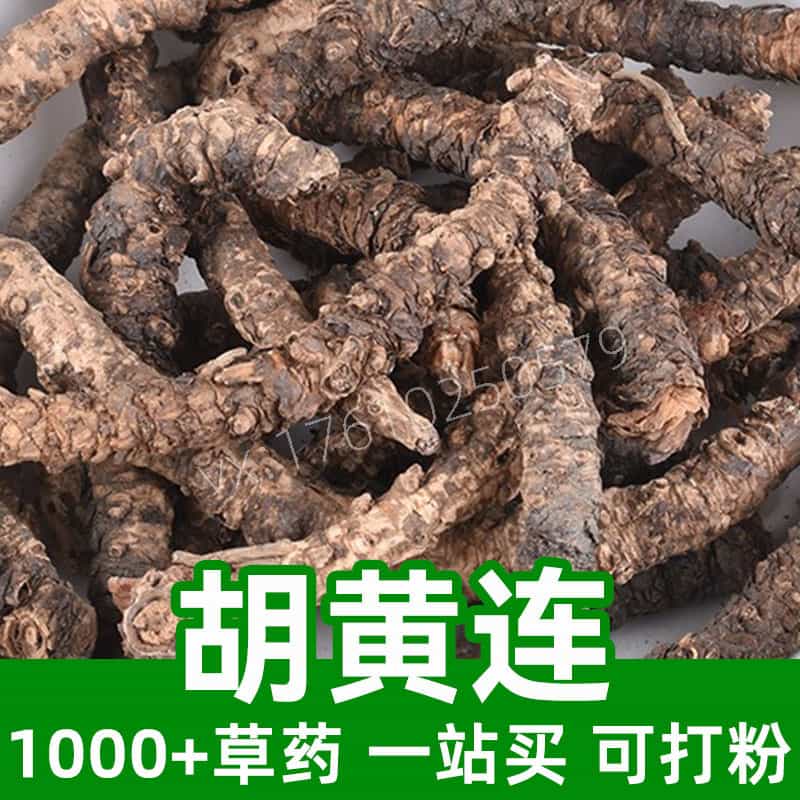



Introduction to Picrorhizoma Coptis
Picrhizoma Coptis, also known as Coptis chinensis or Green Coptis chinensis, is a medicinal plant whose rhizome is the medicinal part. The main ingredients include alkaloids, such as coptisine and berberine. Picrorhizoma Coptis chinensis is mainly produced from the Ranunculaceae plant Coptis chinensis. In the application of traditional Chinese medicine, picrorhizoma Coptis chinensis is widely used for the treatment of clearing heat and dampness, purging fire and detoxification, and is often used to treat symptoms such as fever, thirst, jaundice, dysentery, and mouth sores.
Main active ingredients of picrorhizoma
The main active ingredients of picrorhizoma include compounds such as alkaloids, flavonoids, and glycosides. Among them, alkaloids are one of its main ingredients, including coptisine, berberine, etc., which have antibacterial, anti-inflammatory, and anti-tumor pharmacological effects. These alkaloid compounds are one of the effective ingredients of picrorhizoma, and have certain therapeutic effects on a variety of diseases.
In addition, picrorhizon is also rich in flavonoids, such as berberine and isoflavones, which have multiple biological activities such as antioxidant, anti-inflammatory and antibacterial. These flavonoids play an important role in regulating immune function, inhibiting tumor growth, and reducing inflammatory response.
In addition, picrorhizon also contains some glycosides, such as berberine glycoside and berberine glycoside, which have lipid-lowering, antibacterial and anti-inflammatory pharmacological effects. These compounds are often used in the application of traditional Chinese medicine to treat digestive system diseases, infectious diseases, etc.
In general, picrorhizon is an important Chinese medicinal material, and its main active ingredients include alkaloids, flavonoids, glycosides and other compounds, which have multiple pharmacological effects such as antibacterial, anti-inflammatory, anti-tumor, and immune regulation, and are widely used in the field of traditional Chinese medicine.
Application scenarios and usage and dosage of picrorhizon
Picrorhizon has a wide range of applications in traditional Chinese medicine and food. The following will focus on its application scenarios, usage and dosage in these two fields.
- Application in Traditional Chinese Medicine:
- Rhizoma Coptis chinensis is regarded as an important medicinal material in traditional Chinese medicine, and is often used in prescriptions for clearing heat, drying dampness, purging fire, and detoxifying.
- In clinical practice, it is often used to treat damp-heat syndrome, damp-heat jaundice, hot stranguria, damp-heat diarrhea, dysentery, carbuncle, swelling and poison, etc.
- Rhizoma Coptis chinensis can be used alone or in combination with other medicinal materials, such as prescriptions composed of Rhizoma Coptis chinensis, Radix Scutellariae, and Radix Phellodendri.
- The general usage is decoction or pills, powders, and can also be used externally. When decoction, generally 3-10 grams each time, decocted in water. When used externally, the infusion or decoction can be used to wash the affected area.
- Application in the food field:
- Rhizoma Coptis chinensis also has certain applications in the food industry, and is often used in seasoning, health foods, and medicine and food products.
- Berberine and other ingredients extracted from Rhizoma Coptis chinensis have antioxidant, antibacterial, and tumor-suppressing effects, so they are often added to health foods.
- Among condiments, picrorhizon is often used in cooking, which has the effect of increasing the flavor of food and improving the preservation effect of food.
- Usage and dosage:
- Depending on the specific situation, the usage and dosage will vary. It is recommended to use it under the guidance of a Chinese medicine physician.
- Generally speaking, adults take 3-10 grams each time, divided into 2-3 times, or prepare it into oral dosage forms such as pills and powders according to the doctor's instructions.
- When used externally, it can be ground into powder as needed, and water can be added to rinse the affected area, or it can be made into a decoction for external application.
In general, as an important Chinese medicinal material, picrorhizon has important application value in the fields of traditional Chinese medicine and food. When using it, it should be based on the specific condition and purpose, follow the doctor's instructions or food additive usage standards to ensure safety and effectiveness.
Introduction to the source plant, distribution and growth environment of picrorhizon
Picrorhizon, scientifically known as Coptis chinensis, is a perennial herb belonging to the genus Coptis chinensis of the family Leucaceae. The following will introduce its source plant, distribution and growth environment.
- Plant introduction:
- Picrorhizoma berberis plants usually grow in mountains, forest edges, roadsides, field ditches, etc. at an altitude of 500-2000 meters. It is a shade-loving plant.
- Its roots are yellow, its stems are upright, its leaves are oval or elliptical, wrinkled, and its leaf margins are finely serrated and shiny.
- The flowers of Picrorhizoma berberis are yellow, and the flowering period is generally in summer. The inflorescence is arranged in spikes, and the flowering period is relatively long.
- Distribution:
- Picrorhizoma berberis is mainly distributed in North China, Northeast China, East China, Southwest China and other regions of my country, especially in Hubei, Sichuan, Yunnan, Guizhou, Shaanxi and other provinces.
- In the wild, Picrorhizoma berberis is commonly found in moist environments such as forest edges, valleys, streams, and field ditches. It can also be cultivated on hillsides, grasslands, roadsides and other places.
- Growth environment:
- Picrorhizoma berberis prefers shade, is cold-resistant, and has a wide range of adaptability. It often grows in semi-shady and humid environments, such as valleys, forest edges, and streams.
- The soil requirements are relatively loose, fertile, and well-drained acidic soil. It is not strict with soil requirements, but it is more adaptable to moist soil.
- The growth environment of Picrorhizoma berberis has an important impact on its medicinal value. A more ideal growth environment can ensure the healthy growth of its plants, thereby ensuring the content and quality of its active ingredients.
In summary, Picrorhizoma berberis is a shade-loving perennial herb widely distributed in many provinces in my country. It often grows in moist valleys, forest edges and other environments. It is not strict with soil requirements, but it is more adaptable to acidic and well-drained soil.
Collection, processing, storage and preservation of Picrorhizoma berberis
The collection, processing, storage and preservation of Picrorhizoma berberis are crucial to ensure its medicinal value and quality. The following is the relevant content about the harvesting, processing and storage of Coptis chinensis:
- Harvesting time: The rhizomes of Coptis chinensis are usually harvested in autumn or spring because the content of active ingredients in the plants is higher at this time.
- Harvesting method: When harvesting, choose plants with plump rhizomes and bright yellow color, dig them up with a shovel or spade, and try to keep them intact to avoid damage.
- Cleaning and processing: After harvesting, they should be cleaned immediately to remove soil and impurities, and then the rhizomes of Coptis chinensis should be dried and processed after the surface moisture evaporates.
- Processing method: During processing, the rhizomes of Coptis chinensis are usually cut into small pieces, and then dried or baked until they are completely dry. They can also be ground into powder or cut into slices to facilitate the preparation of traditional Chinese medicine preparations.
- Storage and preservation: The processed Coptis chinensis should be stored in a dry and ventilated place, away from direct sunlight and moisture to prevent mildew and insect infestation. It is best to place it in a sealed container and place a desiccant in the storage container to keep it dry.
- Quality inspection: During storage, check the quality of Coptis chinensis regularly. If any abnormal conditions such as moisture or odor are found, they should be handled in time to avoid affecting its medicinal value.
- Expiration date: Under good storage conditions, Coptis chinensis can generally be stored for more than one year, but its medicinal ingredients may gradually decrease over time, so it is recommended to use it as soon as possible within the shelf life.
- Precautions: During processing and storage, care should be taken to avoid moisture, dampness, and insect pests to ensure the quality and medicinal effect of the product.

Monica Sun is a seasoned expert in the natural raw materials industry, with over a decade of experience specializing in traditional Chinese medicinal herbs, spices, and fungi. She is skilled in the sourcing, processing, and application of these materials, emphasizing sustainability and innovation. Monica Sun has contributed to the development of high-quality natural raw materials that serve as essential components in functional foods, pharmaceuticals, and cosmetics, delivering tailored solutions to meet diverse market needs.

.jpg)