
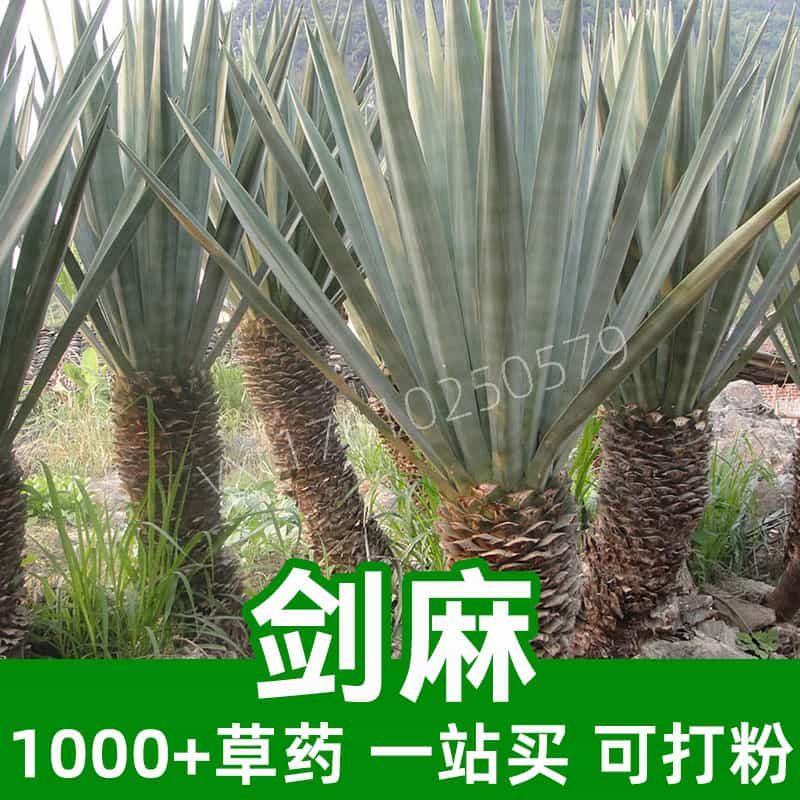



Agave Root Product Introduction
Agave is a woody vine plant native to the subtropical regions of southern China. Its primary components include flavonoids, flavonoid glycosides, saponins, and polysaccharides, with flavonoids being the main active ingredient. Agave is commonly used in Traditional Chinese Medicine, where it is known for its ability to promote blood circulation, nourish the liver and kidneys, and relieve muscle and joint stiffness. In Chinese medicinal practices, it is often used to treat conditions such as rheumatic pain, menstrual disorders, and blood stagnation after childbirth, making it an important medicinal herb.
Main Active Ingredients of Agave Root
Agave contains various chemical components and pharmacologically active substances that contribute to its medicinal benefits.
- Flavonoids: Agave is rich in flavonoids such as rutin and quercetin. These compounds exhibit antioxidant, anti-inflammatory, and anti-thrombotic properties, helping to protect blood vessels, improve microcirculation, and reduce inflammation.
- Flavonoid Glycosides: The plant also contains flavonoid glycosides like isoquercitrin. These compounds help modulate immune function, exhibit antioxidant effects, and demonstrate anti-tumor properties, thus enhancing the body’s resistance to disease.
- Saponins: Agave contains saponins such as agave saponin and agave glycoside. These compounds have anti-inflammatory, analgesic, and platelet aggregation-inhibiting effects, helping to alleviate pain and reduce inflammation.
- Polysaccharides: Polysaccharides found in agave also contribute to immune regulation, anti-oxidative effects, and anti-tumor properties, further boosting the body’s immune defense and resistance to illness.
Overall, the main active ingredients in Agave root, including flavonoids, flavonoid glycosides, saponins, and polysaccharides, provide a range of pharmacological activities such as antioxidation, anti-inflammation, pain relief, and blood circulation enhancement, benefiting human health in various ways.
Applications, Usage, and Dosage of Agave Root
Agave, as an important traditional medicinal material, is widely used in both Traditional Chinese Medicine (TCM) and the food industry. Below are the applications of Agave in these two fields, including its usage and dosage:
Applications in Traditional Chinese Medicine:
- Promoting Blood Circulation and Removing Stasis: Agave is commonly used to treat conditions such as dysmenorrhea and injuries from falls. It can be made into powder form or decocted with other herbs for internal use.
- Nourishing the Liver and Kidneys: Agave is believed to strengthen the liver and kidneys, and replenish qi and blood. It is often used in cases of liver and kidney deficiency or irregular menstruation. Agave can be used in soups or stews, often paired with chicken or pork bones.
- Relaxing Muscles and Joints: Agave helps relieve muscle and joint pain, and is particularly effective for conditions like rheumatic arthritis and lumbar muscle strain. It can be made into an ointment for external use or decocted for internal consumption.
- Regulating Menstrual Flow and Stopping Bleeding: Agave is used to regulate menstruation and stop abnormal bleeding, including conditions like menorrhagia and uterine bleeding. It can be made into a decoction, taken as tea, or formulated into pills.
Applications in the Food Industry:
- Food and Medicine Integration: Agave is used as a health-promoting ingredient in soups, beverages, and other nourishing dishes. It can be added to broths or stews for a nutritious boost.
- Nourishing and HealthMaintenance: Agave is rich in several beneficial nutrients and can be used as a health supplement. It may be consumed as powder and added to congee or pasta to enhance immunity and delay aging.
- Health Supplements: Extracts from Agave are often used in the production of health supplements, such as health teas and beverages, which aim to improve microcirculation and enhance physical vitality.
Dosage and Usage:
- Medicinal Dosage: Agave is typically used in the form of decoctions, with a typical dose ranging from 15-30 grams per day. The dosage may vary depending on the specific condition being treated.
- Food Use: When used as a food material, Agave can be added in quantities of 5-10 grams per cooking session, depending on personal preference and health needs.
In conclusion, Agave is widely applied in both Traditional Chinese Medicine and the food industry. It can be used as a medicinal herb to treat various conditions, or as a food ingredient to promote overall health. However, the usage and dosage should be tailored to individual needs and should be used with caution.
Source Plant, Distribution, and Growing Environment of Agave Root
Agave (Spatholobus suberectus) is a woody vine plant from the legume family, commonly found in the subtropical regions of southern China. Below is a detailed introduction to the source plant, its distribution, and growing environment.
Source Plant Introduction:
Agave is a woody vine with slender stems and smooth surfaces. The plant has compound pinnate leaves with oval or oblong leaflets, small reddish-purple flowers, and pod-like fruits. Known for its strong climbing ability, Agave typically winds around other plants or structures as it grows.
Distribution:
Agave is mainly distributed in the subtropical regions of southern China, particularly in provinces like Guangdong, Guangxi, Fujian, Yunnan, Hunan, and Jiangxi. It is most commonly found in Hunan and Jiangxi provinces. It also has a limited presence in Taiwan and Hainan Island.
Growing Environment:
- Climate: Agave prefers a warm, humid climate and can grow well in areas that are not excessively sunny but still receive adequate light. The ideal temperature for Agave cultivation is between 15°C and 30°C.
- Soil Requirements: Agave is not particularly fussy about soil types, but it thrives in loose, fertile, well-drained soil. It is adaptable to both slightly acidic and alkaline soils, though neutral to mildly acidic soils are ideal.
- Habitat: Agave is typically found in environments such as hillsides, forest edges, and near streams, where it can climb trees, shrubs, or bamboo. The plant shows resilience and can grow in hilly terrains, suburban areas, and even near cities.
- Reproduction: Agave is primarily propagated by seeds, but it can also be reproduced through cutting or division. After sowing, seeds should be kept moist, and under favorable conditions, they will germinate within 7-10 days.
Overall, Agave is a resilient woody vine found in the subtropical regions of southern China, thriving in warm, humid climates and well-drained soils. It typically grows on slopes, forest edges, and stream banks, and can adapt to a variety of environments.
Harvesting, Processing, and Storage of Agave Root
Agave is an important medicinal herb that requires careful attention during harvesting, processing, and storage. Below are some important guidelines for each stage:
Harvesting:
- Harvesting Time: The roots, stems, and bark of Agave are used for medicinal purposes. Harvesting typically occurs in the spring to summer, during the plant’s vigorous growth period. It is best to harvest on a dry day.
- Harvesting Method: Agave roots grow deep into the soil, so careful excavation is required to avoid damaging the plant. Tools such as a shovel are often used to dig around the root system, ensuring that the roots and stems are retrieved intact.
- Harvesting Standards: Only healthy, firm Agave roots and stems should be harvested. Avoid picking old, decayed, or pest-infested plants.
Processing:
- Cleaning: After harvesting, the Agave roots should be cleaned to remove soil and debris. They should then be dried until semi-dry.
- Slicing and Drying: The cleaned Agave roots can be sliced into appropriate sizes and dried thoroughly, either in the sun or through low-temperature drying methods.
- Drying: The dried Agave should be stored in
a cool, dry, and ventilated environment to preserve its active ingredients.
- Formulation: After drying, Agave can be processed into powder or extract form for use in Traditional Chinese Medicine or as a food additive.
Storage:
- Ideal Conditions: Agave should be stored in a cool, dry environment away from direct sunlight, moisture, and pests.
- Packaging: Agave products are typically stored in sealed, airtight containers to prevent contamination and preserve their freshness. Proper packaging is essential to ensure product quality.

Monica Sun is a seasoned expert in the natural raw materials industry, with over a decade of experience specializing in traditional Chinese medicinal herbs, spices, and fungi. She is skilled in the sourcing, processing, and application of these materials, emphasizing sustainability and innovation. Monica Sun has contributed to the development of high-quality natural raw materials that serve as essential components in functional foods, pharmaceuticals, and cosmetics, delivering tailored solutions to meet diverse market needs.
.jpg)