
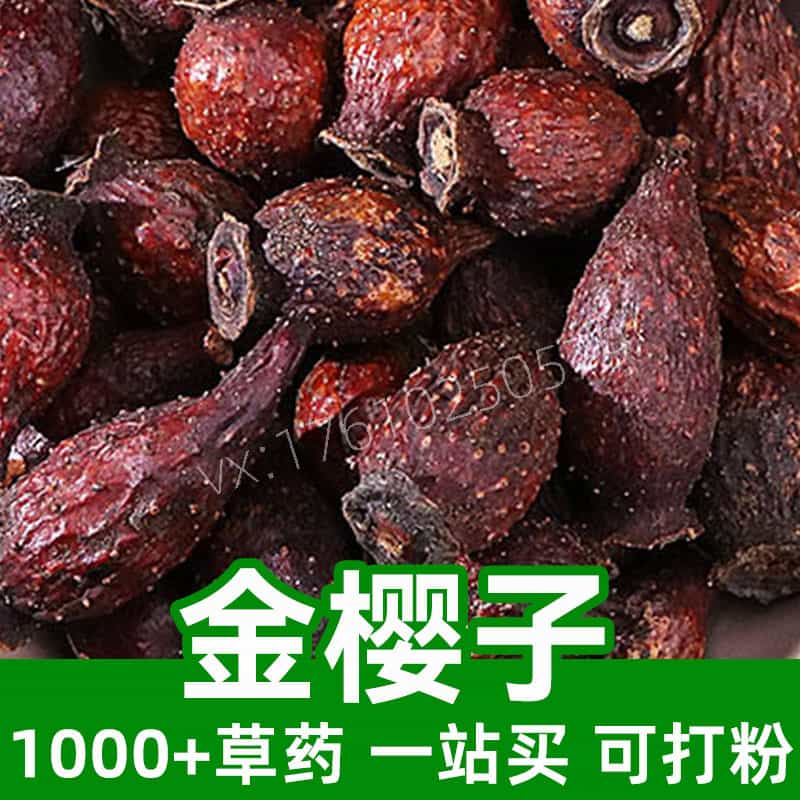



Cherokee Rose Fruit Product Introduction
Cherokee Rose Fruit is the fruit of the Cherokee Rose Fruit tree, which belongs to the Rosaceae family. The fruit is round with smooth skin, and when ripe, it turns yellow or orange-yellow. The flesh is juicy and fragrant. The main ingredients include rich Vitamin C, Vitamin A, Vitamin B, and various minerals, along with abundant plant tannins and antioxidants. In traditional Chinese medicine, it is commonly used to clear heat, detoxify, moisturize the lungs, relieve coughs, improve digestion, and alleviate indigestion. In the food industry, Cherokee Rose Fruit can be made into jams, juices, and alcoholic beverages, offering a delightful flavor.
Main Active Ingredients of Cherokee Rose Fruit
As a natural plant fruit, Cherokee Rose Fruit contains rich nutrients and medicinal components, providing various health benefits.
- Vitamin C: Cherokee Rose Fruit is rich in Vitamin C, one of its primary active ingredients. Vitamin C has antioxidant properties, helps eliminate free radicals, boosts the immune system, promotes collagen synthesis, and is beneficial for skin whitening and anti-aging.
- Vitamin A: Cherokee Rose Fruit is also high in Vitamin A, which supports eye health, maintains skin and mucous membrane health, and strengthens the immune system.
- Vitamin B: This includes Vitamin B1, B2, and B6, which help promote metabolism, maintain proper nervous system function, and enhance the body's resistance.
- Minerals: Cherokee Rose Fruit contains various minerals like potassium, calcium, magnesium, and iron, which help maintain normal physiological functions and support bone health and circulation.
- Plant Tannins: An important component in Cherokee Rose Fruit, plant tannins have astringent, hemostatic, antibacterial, anti-inflammatory, and antioxidant effects, aiding in the treatment of oral ulcers, diarrhea, and other symptoms.
- Antioxidants: Cherokee Rose Fruit is rich in polyphenolic compounds such as flavonoids and carotenoids, which provide powerful antioxidant effects and help prevent chronic diseases like cardiovascular disease and cancer.
In summary, Cherokee Rose Fruit contains various beneficial active ingredients, including Vitamin C, Vitamin A, Vitamin B, minerals, plant tannins, and antioxidants, which offer a range of health benefits such as antioxidant, anti-inflammatory, antibacterial, and metabolism-boosting effects. It can be used as a health food or medicinal ingredient.
Cherokee Rose Fruit Applications and Dosage
Cherokee Rose Fruit is a plant fruit with rich nutritional and medicinal value, widely used in both traditional Chinese medicine and the food industry.
- Traditional Chinese Medicine Applications: In traditional Chinese medicine, Cherokee Rose Fruit is regarded as both a food and medicinal herb. It is used to regulate qi and blood, relieve coughs, strengthen the spleen, and promote digestion. It has a mild nature, with a sweet and sour taste, and targets the liver, spleen, and lung meridians. It is commonly used to treat symptoms like qi and blood deficiency, cough, and bloating.
- Food Applications: Cherokee Rose Fruit is also commonly used as a food additive to make dried fruit, jams, juices, and more. Its sweet and sour taste is loved by many and is widely used in cooking and desserts. It can also be used in tea, enhancing both the flavor and nutritional value of the drink.
- Soup Preparation: Cherokee Rose Fruit can be combined with other medicinal herbs or ingredients to make a nutritious soup, helping to replenish blood, improve qi, and nourish the skin. Common additions include goji berries, red dates, and longan, which offer health benefits.
- Infusion: Cherokee Rose Fruit can be infused in hot water and consumed after softening, helping to regulate digestion, moisturize the lungs, relieve coughs, and improve Vitamin absorption.
- Medicinal Decoction: Cherokee Rose Fruit can be decocted and the juice consumed to help regulate digestion, strengthen the body, and clear heat.
- Honey Pickling: Cherokee Rose Fruit can be soaked in honey to make dried fruit or jam, providing a sweet and sour taste. It can be consumed directly or used as a seasoning.
- Dosage: The recommended dosage of Cherokee Rose Fruit is typically 10-30 grams per serving, but the amount can be adjusted based on individual needs and constitution.
- Precautions: Pregnant women, children, and those with weakened constitutions should consult a doctor before using Cherokee Rose Fruit.
In conclusion, Cherokee Rose Fruit has a wide range of uses in traditional Chinese medicine and the food industry, serving both as a medicinal herb and a food additive, offering various benefits for health and wellness.
Cherokee Rose Fruit Source Plant Introduction, Distribution, and Growth Environment
Cherokee Rose Fruit, scientifically known as *Cornus officinalis*, belongs to the Ranunculaceae order, Rhododendron family, and Cornus genus. Below is detailed information about its source plant, distribution, and growth environment:
- Plant Description: Cherokee Rose Fruit is a deciduous shrub or small tree, growing up to 3-5 meters in height, with a rounded crown. The bark is gray-brown with vertical splits, and the branches are gray or yellow-brown and rough. The leaves are opposite, elliptical or obovate, with pointed or gradually tapering tips and rounded or broadly wedge-shaped bases. The flowers are arranged in terminal or axillary cymes, with 20-30 flowers in each cluster. The fruit is a drupe, spherical in shape, about 1.5-2 cm in diameter, and turns red when ripe, containing seeds.
- Distribution: Cherokee Rose Fruit is primarily found in China, Japan, Korea, and Russia, with China being its main production area. In China, it is widely distributed in regions such as the Yellow River Basin, Yangtze River Basin, and the mountainous areas of South and Southwest China.
- Growth Environment: Cherokee Rose Fruit thrives in warm, humid environments and is not particularly picky about soil. However, it grows best in loose, fertile, well-drained, acidic soils. It is commonly found in valleys, hillsides, stream banks, forest edges, shrubs, and wastelands, at altitudes ranging from low to medium elevations. It requires ample sunlight but can also tolerate partial shade.
- Climate Conditions: Cherokee Rose Fruit is adaptable to a variety of climate conditions. It is cold and drought-resistant, but grows best in warm, humid climates. It can also survive in cold, dry climates. The ideal temperature for growth is between 15-25°C, with a minimum growth temperature of around -18°C.
- Reproduction: Cherokee Rose Fruit can be propagated by seed or cuttings. Seed propagation is the primary natural method, where mature fruit splits open to release seeds into the surrounding soil. Cutting propagation is an artificial method where branches or leaves are inserted into seedling soil to grow new plants.
In summary, Cherokee Rose Fruit is a widely distributed shrub or small tree found in China and other regions, thriving in warm, humid environments with plenty of sunlight. It is adaptable to various climates and grows in a variety of locations, including hillsides and stream banks. It is widely used in traditional Chinese medicine and the food industry.
Cherokee Rose Fruit Harvesting, Processing, and Storage
The harvesting, processing, and storage of Cherokee Rose Fruit are crucial for preserving its quality and medicinal value. Below is a detailed description:
- Harvesting Time: The fruit of Cherokee Rose Fruit typically ripens in the fall, and should be harvested when the fruit turns red, as this is when it is plump and vibrant.
- Harvesting Method: Harvesting should be done on clear, dry days. The fruit should be picked gently, avoiding damage to the fruit and plant.
- Processing: Once harvested, Cherokee Rose Fruit should be immediately washed to remove dirt and impurities. Then, it can be air-dried or wiped clean with a towel. To maintain the integrity and nutritional value of the fruit, excessive processing is not recommended. Drying or air-drying is sufficient.
- Drying Method: After cleaning, Cherokee Rose Fruit should be spread out in a cool, ventilated area, avoiding direct sunlight to prevent spoilage and nutrient loss. The drying time varies depending on the weather, typically ranging from a few days to several weeks.
- Storage: Dried Cherokee Rose Fruit should be kept in a dry, ventilated area, avoiding humidity and direct sunlight to prevent mold and nutrient loss. It can be stored in a sealed container or bag, kept away from strong odors.
- Shelf Life: Properly stored, dried Cherokee Rose Fruit has a shelf life of about 1-2 years. However, it is recommended to consume it within a year to ensure maximum nutritional value.

Monica Sun is a seasoned expert in the natural raw materials industry, with over a decade of experience specializing in traditional Chinese medicinal herbs, spices, and fungi. She is skilled in the sourcing, processing, and application of these materials, emphasizing sustainability and innovation. Monica Sun has contributed to the development of high-quality natural raw materials that serve as essential components in functional foods, pharmaceuticals, and cosmetics, delivering tailored solutions to meet diverse market needs.
.jpg)