
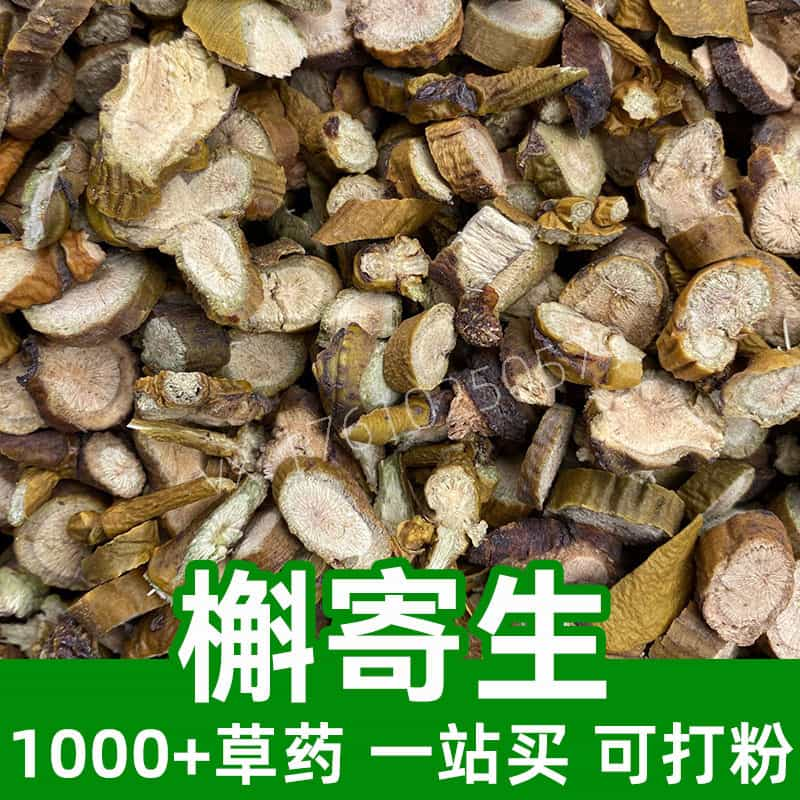



Mistletoe Product Introduction
Mistletoe is a commonly used herb in traditional Chinese medicine, with key components including various alkaloids, polysaccharides, and terpenoids. It typically grows in the mountains or forests, parasitizing trees like elms, cypress, and pines, and is widely distributed across China.
In traditional Chinese medicine, mistletoe has numerous applications. It is used for activating blood circulation, reducing blood stasis, regulating immune function, and enhancing the body's resistance to disease. It is commonly used to treat conditions such as rheumatic pain and tumors. Mistletoe is known for its benefits in warming the middle, strengthening the spleen, activating blood circulation, and anti-tumor effects, and is often used in herbal formulas or as a single herb.
Main Active Ingredients of Mistletoe
Mistletoe is a parasitic plant, and its main active components include various bioactive substances with multiple pharmacological effects. The following are the primary active ingredients of mistletoe:
- Polysaccharides: Mistletoe is rich in polysaccharides such as α-L-pyran glucan and β-D-pyran glucan. These polysaccharides have immunomodulatory, antioxidant, and anti-tumor properties.
- Alkaloids: Mistletoe contains various alkaloids, including veratrum alkaloids, quercetin, and rhamnetin. These alkaloids have sedative, anti-inflammatory, analgesic, and anti-tumor effects.
- Polyphenols: Mistletoe contains abundant polyphenolic compounds like flavonoids and phenolic acids, which exhibit antioxidant, anti-inflammatory, and anti-tumor activities.
- Terpenoids: Mistletoe also contains several terpenoid compounds such as quercetin, quercitrin, and β-sitosterol, which have anti-inflammatory, antioxidant, and anti-tumor bioactivities.
- Essential Oils: Mistletoe contains small amounts of essential oils, with main components like α-para-cresol and eucalyptol, which have antimicrobial and anti-inflammatory effects.
These components work together to regulate immune function, reduce inflammation and pain, provide antioxidant effects, and fight tumors. Mistletoe is widely used in traditional Chinese medicine, either as a standalone herb or combined with other herbs, to treat conditions such as rheumatic pain and tumors.
Mistletoe Applications and Dosage
Mistletoe is an important medicinal herb with widespread applications in traditional Chinese medicine. Below are its common uses and recommended dosage:
- Rheumatic Pain: Mistletoe has the effect of activating blood circulation and expelling wind and cold, commonly used to treat joint pain and muscle aches from rheumatism. It can be used alone or combined with other herbs such as Angelica sinensis, Chuanxiong, and Schisandra. It is typically taken as a decoction or added to soups.
- Tumor Adjunct Treatment: Mistletoe has anti-tumor properties and is used as an adjunct in tumor treatment. It is often combined with other anti-tumor drugs or herbs, such as ginseng, astragalus, and goji berries, to help regulate the immune system and alleviate chemotherapy side effects.
- Immune Modulation: The polysaccharides in mistletoe have immunomodulatory effects, making it useful for enhancing the immune system and preventing colds and infections. It is often included in health tonics or combined with other tonic herbs.
- Anti-Aging: Mistletoe’s antioxidant properties can help eliminate free radicals and delay cell aging. It is commonly used in health supplements or as an ingredient in anti-aging products.
- Digestive System Regulation: Mistletoe’s anti-inflammatory and antibacterial properties help improve digestive system function, promoting appetite, digestion, and absorption. It is useful for treating gastrointestinal disorders, lack of appetite, and other related symptoms.
- Dosage: Mistletoe can be taken as a decoction or in powder, capsule, or pill forms. The typical dosage is 10-30 grams, adjusted according to the specific condition and the individual’s constitution. When preparing as a decoction, mistletoe should be washed and boiled for 30-60 minutes. The common dosage is 10-30 grams, divided into two doses. Powder or capsule forms should be taken according to the instructions or a doctor’s advice.
- Precautions: Mistletoe is cold in nature, so individuals with spleen and stomach weakness or coldness should use it with caution. Pregnant women, nursing mothers, and those with weak constitutions should consult a doctor before use. Overuse may cause digestive discomfort, diarrhea, or other adverse reactions, so it should be used according to medical advice.
Mistletoe has a long history of use in traditional Chinese medicine and is highly regarded for its unique pharmacological properties and broad range of applications.
Mistletoe Source Plant, Distribution, and Growth Environment
Mistletoe (scientific name: *Loranthus parasiticus*) is a common semi-parasitic plant in the Loranthaceae family. Below is information on its source plant, distribution, and growth environment:
- Plant Description: Mistletoe is a parasitic plant that typically grows on the trunks or branches of other trees, absorbing nutrients from the host plants. Its stems are cylindrical, smooth, and branched. The leaves are small, leathery, and typically elliptical or oblong in shape, with a symmetrical arrangement.
- Distribution: Mistletoe is widely distributed in subtropical and tropical regions, especially in East and South Asia. In China, it is mainly found in regions south of the Yangtze River, including Guangdong, Guangxi, Fujian, Jiangxi, Hunan, and Guizhou provinces. It grows in hilly areas, valleys, and by streams.
- Growth Environment: Mistletoe generally grows on the trunks or main stems of trees, preferring trees like birch, elm, locust, willow, and poplar. It has a broad tolerance for different host plants and environmental conditions but thrives in warm, humid climates with plenty of sunlight.
- Host Plants: Mistletoe parasitizes a variety of trees, with common hosts including locust, poplar, willow, elm, and birch. It absorbs nutrients and sap from these trees, using specialized parasitic structures to sustain its growth and reproduction.
- Growth Characteristics: Mistletoe’s growth is parasitic, meaning it relies on the host plant for nutrients and water, as it lacks the ability to photosynthesize. It forms parasitic organs beneath the host plant’s surface and absorbs nutrients through them. Mistletoe can also reproduce via seeds, which are spread by birds or insects and germinate on host plants.
Overall, mistletoe is a common parasitic plant, widely distributed in subtropical and tropical areas, often parasitizing trees like birch, locust, and elm, and prefers warm, humid environments.
Mistletoe Harvesting, Processing, and Storage
Harvesting, processing, and storing mistletoe properly is essential for preserving its quality and medicinal value. Here are the relevant details:
- Harvesting Time: Mistletoe is typically harvested in spring or summer, particularly during the plant's growth peak. It is usually collected before flowering or fruiting, when the plant’s nutrients are abundant.
- Harvesting Method: When harvesting mistletoe, select healthy, green stems and cut them with scissors or by hand. Care should be taken to avoid damaging the plant’s outer bark, as this could affect the quality.
- Processing: After harvesting, mistletoe should be processed promptly, including steps such as washing and drying. It should be soaked and rinsed in clean water to remove dirt and impurities, then air-dried to about 80% dryness to prevent mold.
- Storage: Processed mistletoe should be stored in a well-ventilated, dry, cool area, away from direct sunlight and humidity. It can be sealed in bamboo or paper bags to protect it from insects and mold.

Monica Sun is a seasoned expert in the natural raw materials industry, with over a decade of experience specializing in traditional Chinese medicinal herbs, spices, and fungi. She is skilled in the sourcing, processing, and application of these materials, emphasizing sustainability and innovation. Monica Sun has contributed to the development of high-quality natural raw materials that serve as essential components in functional foods, pharmaceuticals, and cosmetics, delivering tailored solutions to meet diverse market needs.
.jpg)